






Safety
Explore the safety profile of MARGENZA
See safetyThis site is intended for US Healthcare Professionals

For illustration only.
On this page:
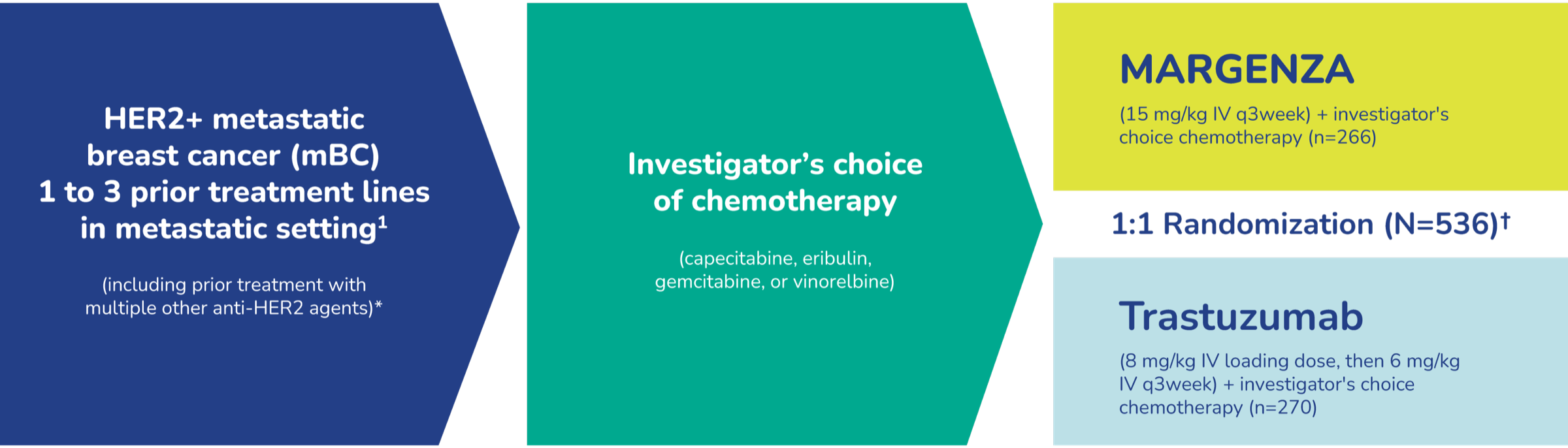
A randomized, multicenter, open-label trial of 536 HER2+ metastatic breast cancer patients (IHC 3+ or ISH-amplified HER2+) who have received two or more prior anti-HER2 regimens, at least one of which was for metastatic disease.1,2
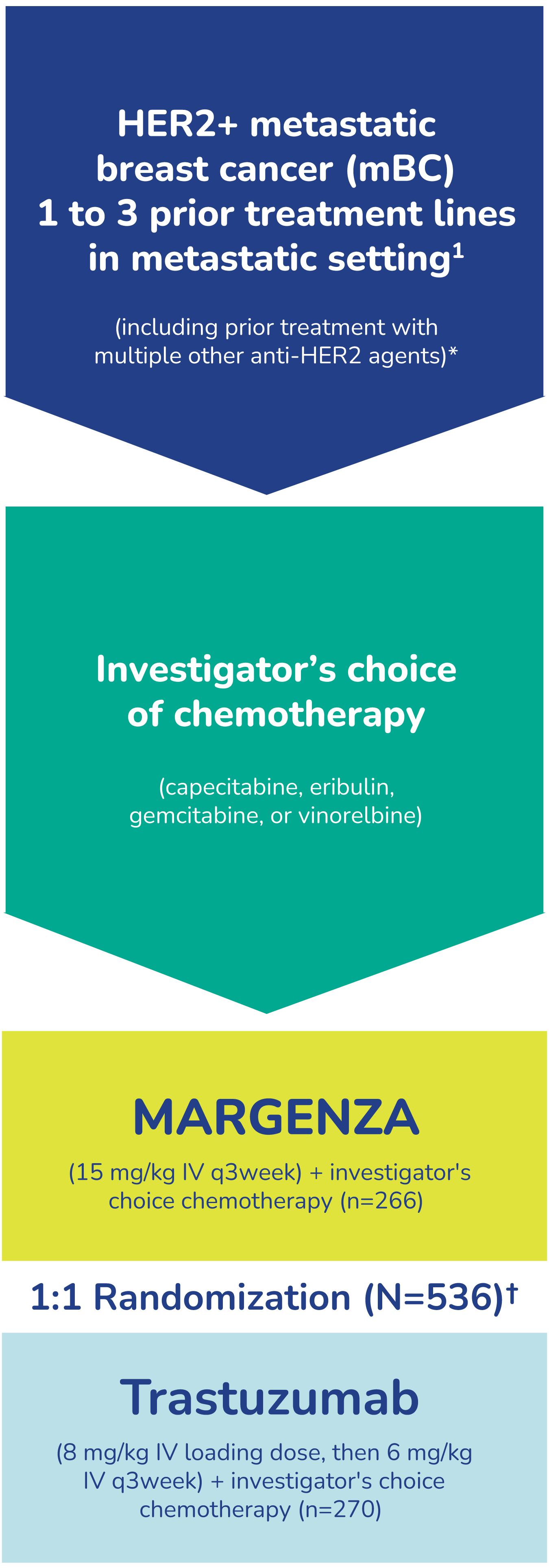
*The median number of prior lines of therapy in the locally advanced/metastatic setting was 2 (range: 1-4). All study patients had previously received trastuzumab, all but 1 patient had previously received pertuzumab, and 91% had previously received ado-trastuzumab emtansine; 47% had visceral disease, 57% had bone metastases, 13% had brain metastases, and 60% were hormone receptor positive.1
†Stratified by chemotherapy choice, number of lines of therapy in the metastatic setting (≤2, >2), and number of metastatic sites (≤2, >2).1,2
IHC=immunohistochemistry; ISH=in situ hybridization.
OS3§
Median (months) (95% CI)
21.6 (18.9‑25.1)
(n=266)
21.9 (18.7‑24.2)
(n=270)
ORR for patients with measurable disease1¶
Confirmed ORR (%) (95% CI)
22 (17‑27)
(n=262)
16 (12‑20)
(n=262)
DOR1
Median (months) (95% CI)#
6.1 (4.1‑9.1)
(n=58)
6.0 (4.0‑6.9)
(n=42)
§HR=0.95 (95% CI, 0.77-1.17). The OS analysis for the ITT population did not demonstrate a statistically significant advantage.
¶Assessed per BICR.
#Based on Kaplan-Meier estimates.
ITT=intent-to-treat.
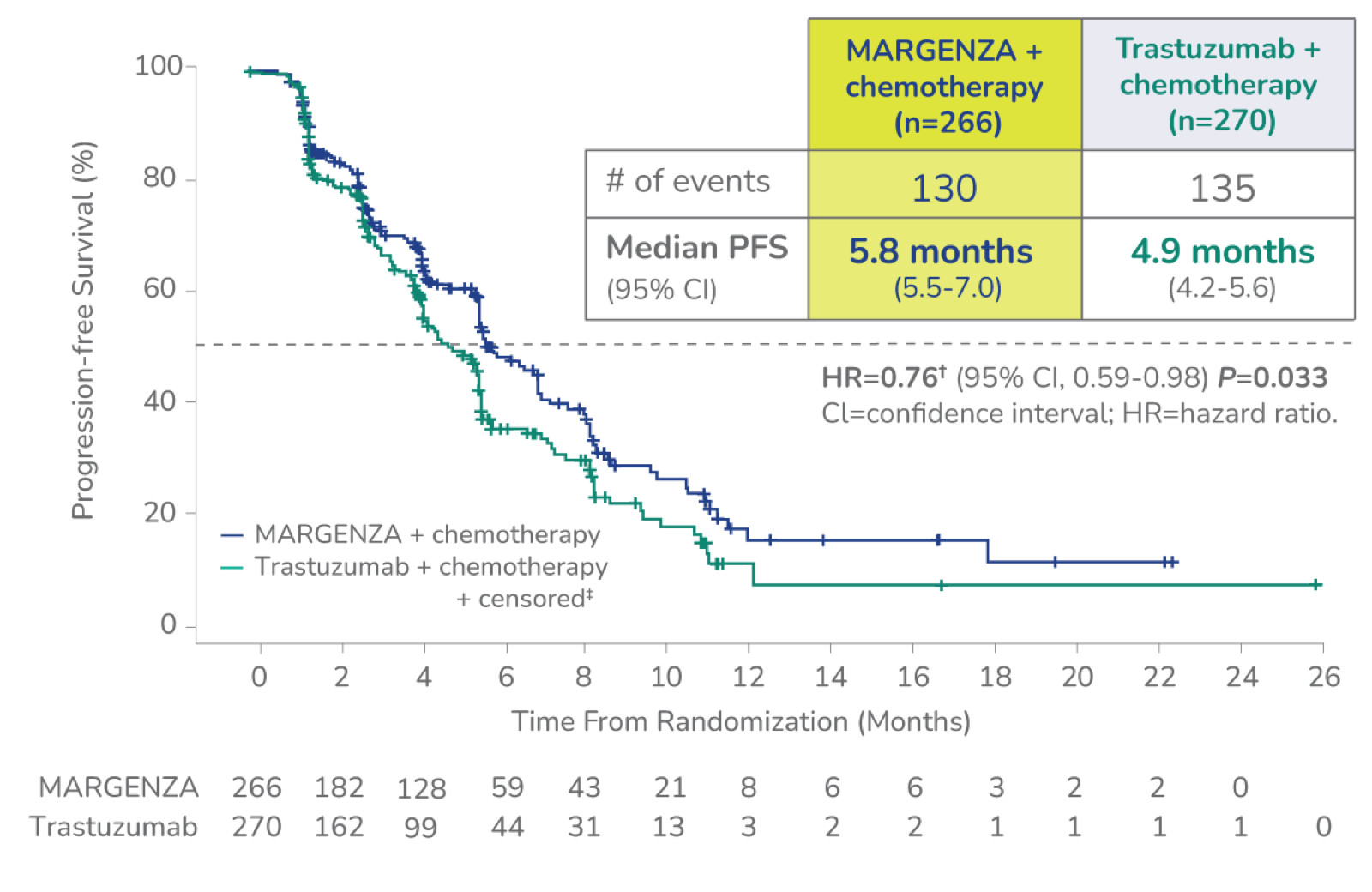
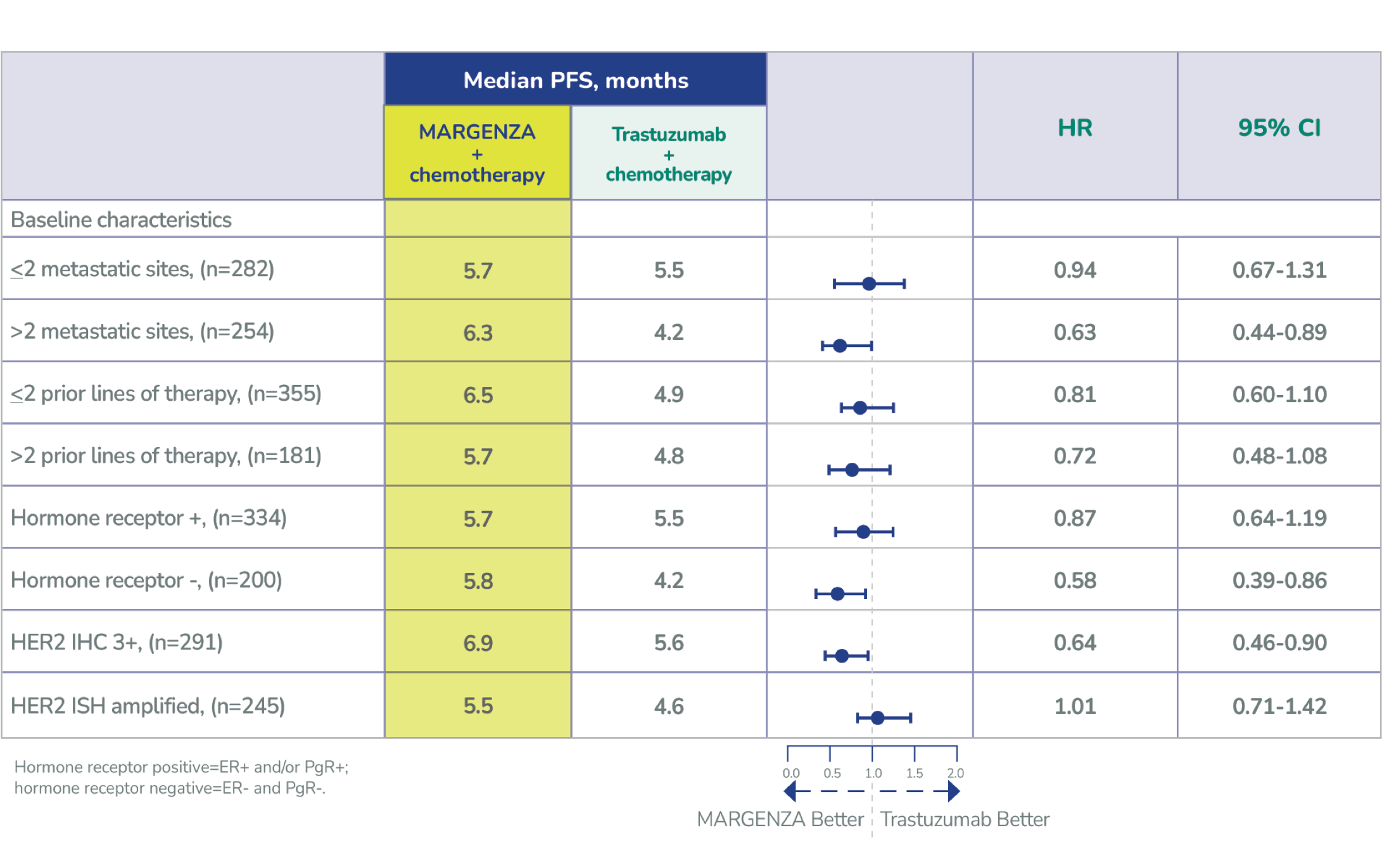
Limitation: These are exploratory analyses; the data require cautious interpretation and could represent chance findings. Therefore, no conclusions can be drawn.
 See the full results of the SOPHIA trial
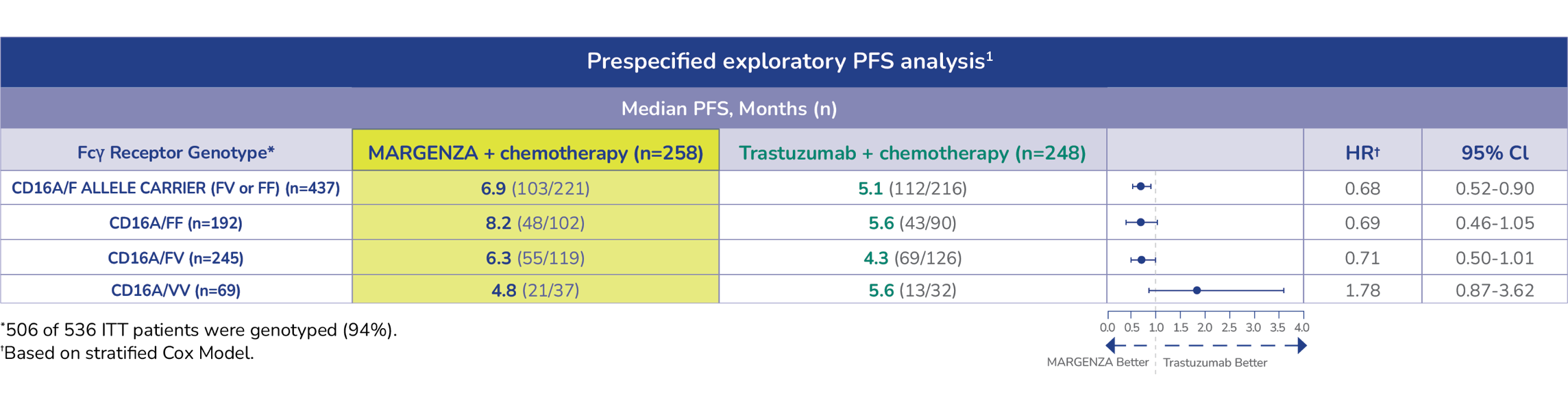
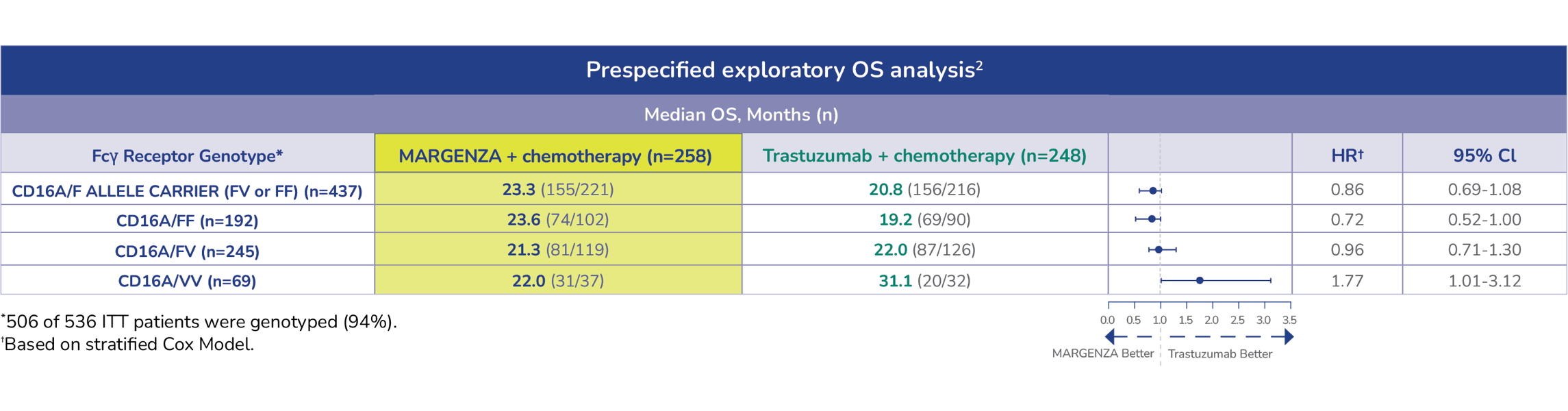
The Fc domain of margetuximab is engineered conferring increased binding to both allotypes (158F or V) of the activating Fcγ receptor FcγRIIIA (CD16A)2,4
Limitation: These are exploratory analyses; the data require cautious interpretation and could represent chance findings. Therefore, no conclusions can be drawn.
Note: All recommendations are category 2A unless otherwise indicated.
||Capecitabine, eribulin, gemcitabine, or vinorelbine.
NCCN makes no warranties of any kind whatsoever regarding their content, use or application and disclaims any responsibility for their application or use in any way.
NCCN=National Comprehensive Cancer Network® (NCCN®).
aFam-trastuzumab deruxtecan-nxki is associated with interstitial lung disease (ILD)/pneumonitis. Regular monitoring for this serious side effect is recommended. For patients with a history of ILD/pneumonitis, there are no data on managing safety or toxicity of this drug in a trial.
bTucatinib + trastuzumab + capecitabine is preferred in patients with both systemic and CNS progression in the third-line setting and beyond; and it may be given in the second-line setting.
cSingle-agent fam-trastuzumab deruxtecan-nxki may be considered in the first-line setting as an option for select patients (ie, those with rapid progression within 6 months of neoadjuvant or adjuvant therapy [12 months for pertuzumab-containing regimens]).
dMay be used as an option for third-line and beyond; the optimal sequence for third-line therapy and beyond is not known. If not a candidate, fam-trastuzumab T-DM1 could be considered in the second-line.
eMultiple lines of concurrent chemotherapy with anti-HER2 therapy (trastuzumab or a TKI) offer clinical benefit for recurrent unresectable HER2+ metastatic breast cancer and have been studied in phase 2 or 3 trials. Clinical experience suggests frequent clinical benefit for such treatment. However, there are no meaningful data for use of any of these regimens among patients previously treated with pertuzumab-based chemotherapy, ado-trastuzumab emtansine, fam-trastuzumab deruxtecan-nxki, or trastuzumab/capecitabine/tucatinib regimens. Thus, the optimal sequence or true benefit of therapy is not known.
fTrastuzumab given in combination with an anthracycline is associated with significant cardiac toxicity. Concurrent use of trastuzumab and pertuzumab with an anthracycline should be avoided. Trastuzumab may be safely combined with all non-anthracycline–containing preferred and other single agents listed on (BINV‑Q 5) for recurrent or metastatic breast cancer.
Explore the safety profile of MARGENZA
See safetySee how to properly administer MARGENZA
See dosingNeed more information? Our team is ready to help
Request a repReferences: 1. MARGENZA® (margetuximab-cmkb). Prescribing Information. TerSera Therapeutics LLC. 2. Rugo HS, Im SA, Cardoso F, et al. Efficacy of margetuximab vs trastuzumab in patients with pretreated ERBB2-positive advanced breast cancer: a phase 3 randomized clinical trial. JAMA Oncol. 2021;7(4):573-584. doi:10.1001/jamaoncol.2020.7932 3. Rugo HS, Im SA, Cardoso F, et al. Margetuximab versus trastuzumab in patients with previously treated HER2-positive advanced breast cancer (SOPHIA): final overall survival results from a randomized Phase 3 trial. J Clin Oncol. 2023;41(2):198-205. doi:10.1200/JCO.21.02937 4. Data on file. TerSera Therapeutics LLC. 5. Referenced with permission from the NCCN Clinical Practice Guidelines in Oncology (NCCN Guidelines®) for Breast Cancer. V.3.2026. ©National Comprehensive Cancer Network, Inc. 2026. All rights reserved. Accessed May 8, 2026. To view the most recent and complete version of the guidelines, go online to NCCN.org. NCCN makes no warranties of any kind whatsoever regarding their content, use, or application and disclaims any responsibility for their application or use in any way.
Indication
MARGENZA is a HER2/neu receptor antagonist indicated, in combination with chemotherapy, for the treatment of adult patients with metastatic HER2-positive breast cancer who have received two or more prior anti-HER2 regimens, at least one of which was for metastatic disease.
Important Safety Information
BOXED WARNING: LEFT VENTRICULAR DYSFUNCTION AND EMBRYO-FETAL TOXICITY
Left Ventricular Dysfunction: MARGENZA may lead to reductions in left ventricular ejection fraction (LVEF). Evaluate cardiac function prior to and during treatment. Discontinue MARGENZA treatment for a confirmed clinically significant decrease in left ventricular function.
Embryo-Fetal Toxicity: Exposure to MARGENZA during pregnancy can cause embryo-fetal harm. Advise patients of the risk and need for effective contraception.
Additional Important Safety Information
Left Ventricular Dysfunction
Evaluate cardiac function within 4 weeks prior to and every 3 months during and upon completion of treatment.
In the pivotal SOPHIA trial, left ventricular dysfunction occurred in 1.9% of patients treated with MARGENZA.
MARGENZA has not been studied in patients with a pretreatment LVEF value of <50%, a prior history of myocardial infarction, or unstable angina within 6 months, or congestive heart failure NYHA class II-IV.
Embryo-Fetal Toxicity
Based on findings in animals and mechanism of action, MARGENZA can cause fetal harm when administered to a pregnant woman.
Verify pregnancy status of women of reproductive potential prior to initiation of MARGENZA.
Infusion-Related Reactions (IRRs)
MARGENZA can cause IRRs. Monitor patients during and after MARGENZA infusion for signs and symptoms. If a significant infusion-associated reaction occurs, slow or interrupt the infusion and administer appropriate medical therapies.
In the pivotal SOPHIA trial, IRRs were reported by 13% of patients on MARGENZA plus chemotherapy. Most of the IRRs occur during Cycle 1. Grade 3 IRRs were reported in 1.5% of MARGENZA-treated patients.
Interrupt MARGENZA infusion in patients experiencing dyspnea or clinically significant hypotension. Monitor patients until symptoms completely resolve.
Most Common Adverse Reactions
The most common adverse drug reactions (>10%) with MARGENZA in combination with chemotherapy in order of frequency are fatigue/asthenia, nausea, diarrhea, vomiting, constipation, headache, pyrexia, alopecia, abdominal pain, peripheral neuropathy, arthralgia/myalgia, cough, decreased appetite, dyspnea, infusion-related reactions, palmar-plantar erythrodysesthesia, and extremity pain.
To report SUSPECTED ADVERSE REACTIONS, contact the FDA at 1‑800‑FDA‑1088 or www.FDA.gov/medwatch. You may also contact TerSera Therapeutics at 1‑844‑334‑4035 or medicalinformation@tersera.com.
Please see accompanying Full Prescribing Information, including Boxed Warning.
Indication
MARGENZA is a HER2/neu receptor antagonist indicated, in combination with chemotherapy, for the treatment of adult patients with metastatic HER2-positive breast cancer who have received two or more prior anti-HER2 regimens, at least one of which was for metastatic disease.
MARGENZA is a HER2/neu receptor antagonist indicated, in combination with chemotherapy, for the treatment of adult patients with metastatic HER2-positive breast cancer who have received two or more prior anti-HER2 regimens, at least one of which was for metastatic disease.
The information contained in this section of the site is intended for US Healthcare Professionals only. Click Continue if you are a US Healthcare Professional.
If you click “Continue” below, you will leave the current site. TerSera is not responsible for the privacy policy of any third-party websites. We encourage you to read the privacy policy of every website you visit.